📍 Madhyamgram  ·  Chinar Park, KolkataMadhyamgram & Chinar Park, Kolkata
info@sparshaivf.com 📞 +91-98306-66677 📞 +91-84208-58533 ENবাংলা 🌐
Home › Fertility Treatments › ICSI
Intracytoplasmic Sperm Injection

ICSI Treatment in Kolkata.

When sperm cannot fertilise an egg on their own, an embryologist does it for them, one sperm, one egg, under a microscope. ICSI is the single biggest advance in male infertility treatment, and it happens in Sparsha's own closed-chamber laboratory.

Free first fertility consult Written pricing 0% EMI available
Book Free Consultation 📞 +91-98306-66677
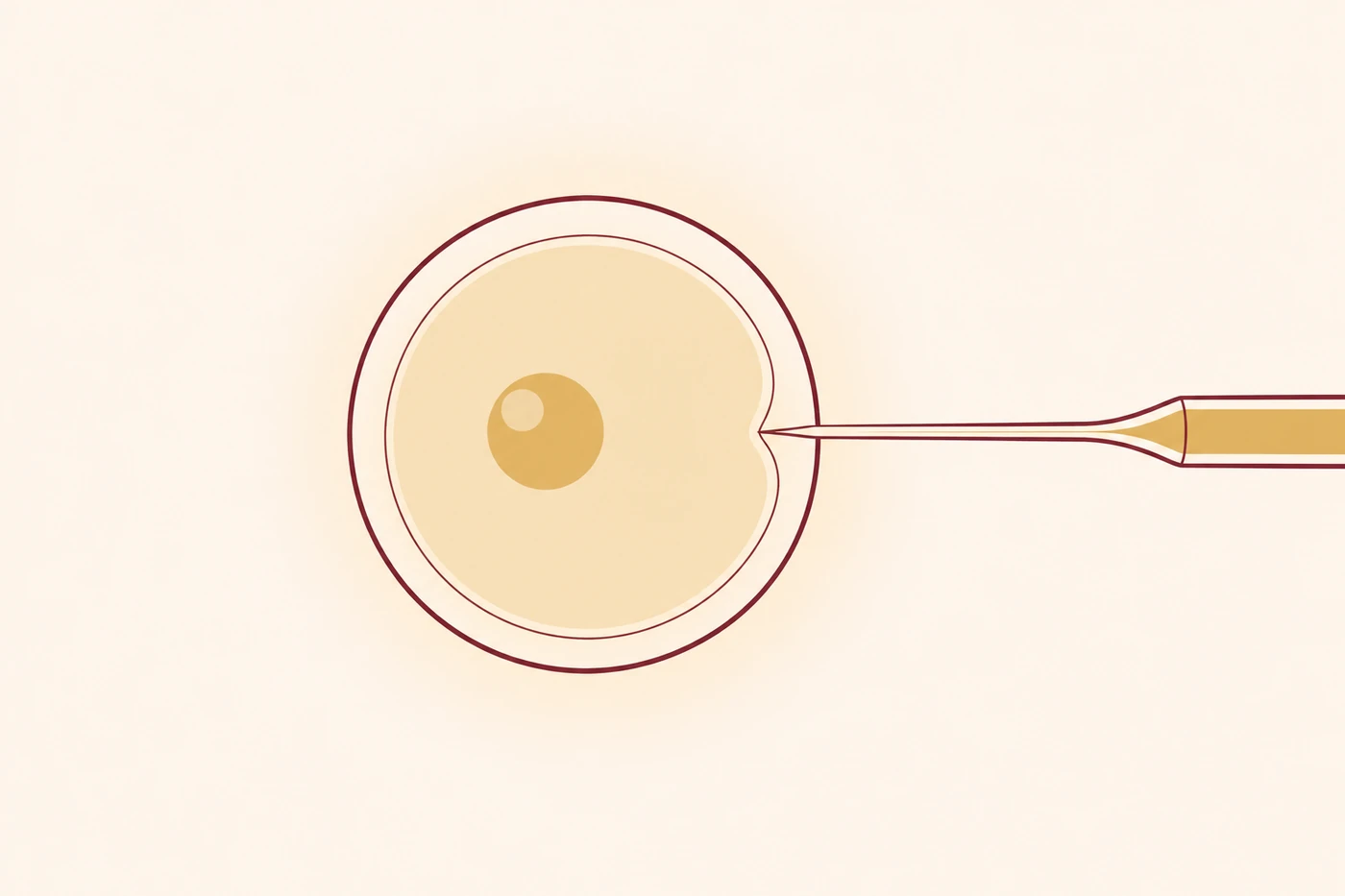
Illustration: a single sperm injected into an egg during ICSI
2003Caring since
20,000+Families helped
4.8★2,900+ Google reviews across our centres
0% EMIUp to 24 months

What ICSI is, in plain language

In a standard IVF cycle, the eggs collected from the ovary are placed in a dish with prepared sperm and left to fertilise naturally. That works when sperm are healthy and plentiful. When they are not, the eggs can sit unfertilised and an entire cycle is lost.

ICSI removes that risk. Under a high-powered microscope, the embryologist selects a single healthy-looking sperm, immobilises it, and injects it directly into the centre of a mature egg using a needle finer than a human hair. Everything after that, embryo culture, blastocyst growth, transfer, follows the normal IVF pathway.

Who ICSI is for

ICSI is recommended when the male factor is the obstacle: very low sperm count (oligospermia), poor movement (asthenospermia), abnormal shapes (teratospermia), high DNA fragmentation, or azoospermia where sperm must be retrieved surgically from the testis or epididymis.

It is also used when a previous IVF cycle produced poor or zero fertilisation, when eggs are frozen and thawed, and in cycles where only a small number of eggs are available and none can be risked. Nearly half of all infertility involves a male factor, which is why ICSI has become so common worldwide.
The process

How an ICSI cycle runs at Sparsha

1. Evaluation of both partners

Semen analysis with, where needed, DNA fragmentation testing and a urology review, alongside the female hormone profile and scans. The decision to use ICSI is made on evidence, not by default.

2. Ovarian stimulation

10 to 12 days of injections with scan monitoring, adjusting doses to grow a healthy cohort of follicles while avoiding overstimulation.

3. Egg retrieval

A 20-minute procedure under light sedation. The same morning, the sperm sample is prepared, or surgical sperm retrieval is performed where required.

4. The injection itself

Each mature egg is injected with one selected sperm at the micromanipulation station inside the closed-chamber laboratory.

5. Embryo culture

Fertilisation is checked the next morning, and embryos are grown to the blastocyst stage where possible so the strongest can be chosen.

6. Transfer & freezing

A single healthy blastocyst is transferred; remaining good embryos are vitrified for future attempts without repeating stimulation.

Cost of ICSI in Kolkata

At Sparsha an IVF cycle ranges from about Rs.75,000 to Rs.1,50,000 depending on medicines and the procedures your case needs, with ICSI added where indicated. Medicines are usually the largest variable, and donor programmes carry their own separate costs.

Every package is written down before treatment starts, with no charges introduced mid-cycle, and interest-free EMI over 24 months is available. Full itemised figures are on the IVF cost page.

Honest expectations

ICSI reliably solves the fertilisation step: commonly 75 to 85 percent of injected eggs fertilise. What ICSI cannot do is improve egg quality or reverse the effect of age, so pregnancy rates still follow the female partner's age curve.

That is worth saying plainly, because some centres present ICSI as a guarantee. It is not. It is the right tool for a specific problem, and used properly it turns cases that were once untreatable into families.

Quick answers

Frequently asked questions

What is the difference between IVF and ICSI?

In conventional IVF, eggs and sperm are placed together and fertilisation happens on its own. In ICSI, an embryologist injects one selected sperm directly into each mature egg. ICSI is used when sperm count, motility or shape make natural fertilisation unlikely, or when a previous IVF cycle had poor fertilisation.

Does ICSI cost more than IVF?

ICSI is usually an addition to the IVF cycle cost, since it needs micromanipulation equipment and embryologist time. At Sparsha the full cycle including ICSI is quoted in writing before you start, and interest-free EMI over 24 months is available.

Is an ICSI baby normal?

Yes. Decades of data show children born after ICSI develop like naturally conceived children. ICSI only helps fertilisation happen; the pregnancy then proceeds exactly like any other.

Can ICSI work with a very low sperm count?

Often, yes. ICSI needs only a few healthy sperm, and even in azoospermia sperm retrieved surgically from the testis can be used. This is precisely the situation ICSI was invented for.

What is the success rate of ICSI?

Fertilisation rates with ICSI are high, commonly around 75 to 85 percent of injected eggs. Pregnancy success then depends mainly on egg quality and the woman's age rather than on the injection itself.

We call back within 30 minutes

Ask whether ICSI is right for you.

A semen analysis and one honest consultation usually answer it. First fertility consultation is free.

📞 +91-98306-66677 · 📞 +91-84208-58533

🔒 Private. Sent securely to the Sparsha team.
💬 WhatsApp
Free first fertility consultation Book Now 💬